
Some comfort problems look random until the clock starts telling the truth. A building feels normal in the morning, uncomfortable by late afternoon, and perfectly acceptable again after sunset. That pattern often leads owners to blame the thermostat, the equipment, or the weather in general when the real issue is usually more specific.
Time-based comfort complaints are rarely solved by guesswork. They require a service approach that treats timing as evidence rather than background noise. For property managers, facility teams, and building owners, that matters because a system can appear functional during a short inspection and still fail the building when heat gain, occupancy, airflow demand, or control conditions change later in the day. A proper diagnosis starts by understanding exactly when the complaint appears and what else changes with it.
Why Timing Changes The Investigation
- The Schedule Often Reveals The Cause
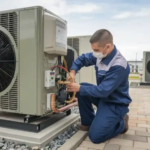
A comfort problem that occurs at the same time each day already gives the technician useful information. If a second floor overheats every afternoon or a particular zone gets stuffy only in the evening, the issue is usually tied to changing building conditions rather than a constant mechanical failure. A service team handling concerns related to Headland, AL, Heat Pump Repair would typically begin by asking when the problem started, how long it has lasted, whether it affects one room or several, and what the outdoor and indoor conditions were at that time. Those details narrow the field quickly and keep the diagnosis grounded in actual building behavior.
- Sun Exposure Changes Indoor Load
One of the first things HVAC service checks is solar heat gain. Rooms with west-facing windows, poor shading, or limited insulation can absorb a great deal of heat during the afternoon, even when the HVAC equipment is operating normally. That is why some spaces feel balanced early in the day and then drift out of range later. The system may not be failing in a conventional sense. It may be trying to keep up with a load spike created by sunlight, glass exposure, attic heat, or exterior wall gain. A technician has to look at how the building envelope interacts with the system, not just whether the air handler turns on when called.
- Occupancy Patterns Affect Performance
People, lights, electronics, appliances, and equipment all add heat to a space. In offices, retail areas, multi-use rooms, and busy homes, those internal loads often increase as the day progresses. A room that feels comfortable at 9 a.m. may feel heavy, warm, or humid by 3 p.m., simply because more heat is generated inside. VAC service has to account for that pattern during diagnosis. The issue may not be an undersized system alone. It may be a mismatch between how the space is actually used and how air is being delivered when occupancy peaks.
- Airflow Problems Become More Noticeable
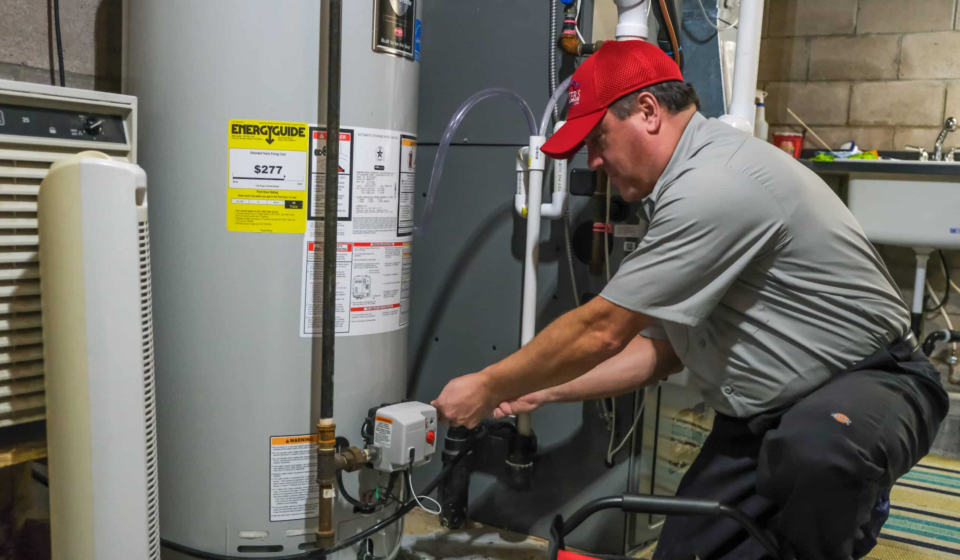
Some comfort complaints only appear during heavier demand because airflow weaknesses are easier to detect when the system is working harder. A duct run in a hot attic may lose cooling effectiveness in the afternoon. A distant room may get enough air during mild conditions bu, but fall behind once outdoor temperatures rise. Dirty filters, undersized returns, and incorrectly installed dampers can all create symptoms that seem time-specific because they are most obvious when the system is under stress. This is why technicians measure airflow, inspect duct conditions, and evaluate static pressure instead of assuming every timed complaint is a refrigerant or equipment issue.
- Thermostat Location Can Mislead
A thermostat only knows the conditions at its installation location. If it sits in a shaded hallway, near a return grille, or in an area that remains more stable than the rooms people actually use, it may satisfy too early. At the same time, other zones continue to drift out of the comfort range. Time-of-day complaints often expose this problem because temperature differences across the building become more pronounced as sunlight, occupancy, and attic conditions shift. HVAC service has to determine whether the control point is likely representative of the problem space or simply a mask.
- Attic And Insulation Conditions Matter
When complaints appear during peak heat or after sunset, technicians often inspect the attic and insulation conditions as part of the diagnosis. Ducts running through exterior areas with reme attic temperatures, missing insulation, air leakage around penetrations, and poor ventilation can all affect comfort at certain times. In the afternoon, attic heat may drive temperatures up in upper rooms. At night, poorly insulated areas may lose conditioned air faster and create cooler spots. These are building-performance issues, but they directly affect how the HVAC system behaves and how comfortable the space feels to occupants.
Good Diagnosis Requires Real Patterns
Comfort complaints that follow a daily pattern usually tell a clear story. They point to changes in solar gain, occupancy, airflow, thermostat sensing, attic conditions, or building load rather than a simple nonstop equipment defect. That is why effective HVAC service does more than inspect the unit and move on. It studies when the problem happens, how the space changes over time, and whether the system is responding to building conditions it was never meant to ignore. For property owners and managers, that approach matters because the right fix depends on the real cause, and time-of-day patterns are often the strongest clue they have.